
Cashli: Cash Advance & Rewards
Cashli FundsFinance
4.12.81K Reviews
- Version
- 1.0.19
- Installs
- 100.00K
- Age Rating
- Everyone
Screenshots
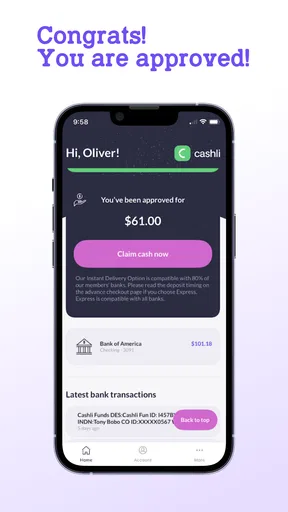
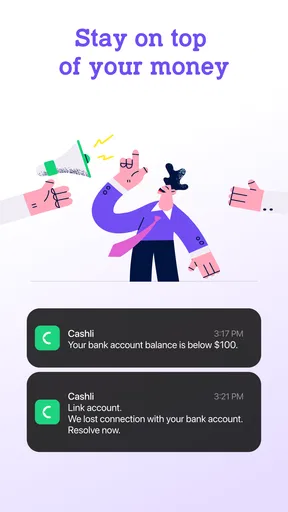
Our Review of Cashli: Cash Advance & Rewards
 Analysis by Appyee
When an unexpected expense lands between paydays, I understand why a cash-advance app can feel appealing. Cashli: Cash Advance & Rewards is a free finance app from Cashli Funds that focuses on getting short-term help through a relatively simple mobile workflow. I found the main appeal easy to understand: instead of treating it like a full budgeting suite, the app is built around a quick request for money and the possibility of earning rewards through continued use.
That narrow purpose is both its strength and its boundary. Cashli is not something I would use as a replacement for a bank account, a detailed spending tracker, or long-term debt planning. I see it as a tool for a specific moment: a small cash-flow gap that needs attention before the next regular income arrives. Used with discipline, it may be convenient. Used as a routine way to cover everyday spending, it can encourage a cycle that becomes harder to manage.
How I approached the everyday Cashli workflow
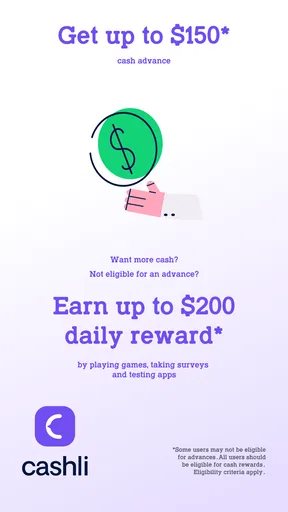
The first thing I would do with any financial app is slow down before requesting money. Cashli’s store summary presents the idea of getting up to 150 bucks now, but that headline should not be treated as an automatic promise for every user. The practical amount available to a person can depend on the app’s own assessment and the information requested during setup. I would open the app, read each screen carefully, and check the repayment details before treating the available amount as part of my budget.
That simple habit matters because a cash advance is not extra income. It is money arriving earlier than expected, with a future obligation attached. My preferred baseline workflow would be to identify the exact bill or emergency purchase, request only what closes that gap, and write down the expected repayment date. If I cannot explain where the repayment will come from, I would not proceed. This approach keeps the app in its proper role instead of allowing a fast request to become an impulse purchase.
The application is listed as free, which makes trying the basic experience less intimidating than paying for a finance tool before knowing whether it fits. Free does not mean that every financial service connected with an advance is automatically costless, however. I would inspect the final request and repayment screens for any applicable charges, conditions, or optional products. In finance, the important figure is not merely what it costs to install an app; it is what the complete transaction means for the money arriving later.
A realistic situation would be a delayed paycheck combined with a necessary grocery trip. I might use Cashli to cover only the shortfall, then immediately mark the repayment date in my calendar. I would avoid adding entertainment, shopping, or subscriptions to the request simply because some room appears available. The best use case is a defined, temporary need. The weakest use case is an open-ended desire to make the current week feel less restricted.
I also appreciate that the app is aimed at general audiences, with an Everyone content rating. That makes the presentation approachable, but it should not be confused with financial suitability for every person. A straightforward interface can help someone complete a task, yet it cannot replace a personal assessment of income stability, existing obligations, or the consequences of missing repayment.
What I would check before accepting an advance
I would look for four practical answers before confirming anything: how much I would receive, when repayment is expected, whether any cost applies, and what happens if my circumstances change. These questions are more valuable than focusing only on the maximum advertised amount. A smaller request that I can comfortably repay is safer than taking the largest amount simply because the app displays it.
I would also make sure the destination for the money is correct and that my personal details are entered carefully. Financial apps are a poor place for rushed typing. A wrong account detail or misunderstood confirmation can create a separate problem from the original cash shortage. My rule is to review every summary screen once, especially when the app moves quickly from eligibility to confirmation.
Another useful habit is to separate the advance decision from the rewards decision. The rewards side may make the app feel more engaging, but it should never persuade me to borrow more or return to the app unnecessarily. I would treat rewards as an optional extra, not as a discount on the responsibility created by an advance. If an activity takes time, requires information, or encourages additional financial actions, I would judge it by its real value rather than by the word “rewards.”
Settings and permissions deserve a careful look
Rather than tapping through setup, I would review the app’s available settings and device permissions at a calm moment. I would enable notifications only when they provide useful reminders about an application, account activity, or repayment. If notifications become distracting, I would reduce them through the app or the phone’s system controls instead of allowing frequent prompts to shape my spending decisions.
I would also check whether account information, contact details, or other personal data can be edited from the profile area. Keeping those details current can prevent avoidable confusion, but I would not enter information that is unrelated to the service’s stated purpose. A good finance-app habit is data minimization: provide what is needed, read why it is requested, and avoid treating every optional field as mandatory.
Cashli Funds is the developer behind the app, and I would use the developer identity shown in the application store and within the app when looking for support or account help. If a question concerns eligibility, repayment, or a transaction, I would keep the relevant confirmation details available when contacting support. That is more effective than sending a vague message such as “the money did not work,” because financial troubleshooting usually depends on the exact stage where something stopped.
The app runs on Android versions starting with 8.0, so compatibility should be comfortable for many older devices. Still, I would keep the operating system and the app itself reasonably current. Cashli’s current version is 1.0.19, and updating can matter when a finance app changes its login flow, fixes a display problem, or improves compatibility. I would update through the official app store rather than installing unofficial copies, especially because the app handles sensitive financial information.
I would not assume that changing a setting can alter eligibility or guarantee a larger advance. Settings can improve reminders, privacy, and convenience; they should not be treated as shortcuts around the app’s financial checks. That distinction is important for experienced use. The safest “advanced” technique is not finding a trick to unlock money, but making the workflow predictable and easy to audit.
Faster patterns that still keep me in control
Once I understood the basic flow, I would create a repeatable routine. First, I would check my bank balance and upcoming obligations outside Cashli. Next, I would decide the exact shortfall. Then I would open the app, review the available terms, and compare the repayment date with my income calendar. This order prevents the app’s available amount from becoming the starting point for my decision.
A phone calendar reminder is especially useful. I would schedule one reminder several days before repayment and another on the expected date, using neutral language such as “check Cashli repayment.” I would not rely solely on push notifications because phone settings can silence them, and a financial commitment deserves a backup reminder. This is a small workflow improvement, but it removes the common mistake of remembering the advance only when the repayment is already due.
I would also keep a simple note recording the request date, amount, purpose, and repayment plan. The note does not need to contain sensitive login information. Its purpose is to show whether I am using the app for rare gaps or repeatedly leaning on it for normal expenses. If I notice several entries close together, that is a signal to stop requesting advances and review my budget instead.
The rewards component is where I would apply the most restraint. I would look at the available activity and ask whether it fits a task I already intended to complete. I would avoid spending money, sharing unnecessary information, or changing financial behavior merely to chase a small reward. A reward is only useful if the steps required do not cost more in time, money, privacy, or temptation than the benefit provides.
This is also where Cashli differs from usual alternatives. A traditional bank account offers broader money management, direct deposits, transfers, and a longer history of financial tools, but it may not provide the same focused advance-and-rewards experience. A budgeting app can help me plan and identify a shortfall, yet it generally does not solve the immediate cash-flow problem by itself. A credit card may be more flexible for some purchases, but it can carry interest and encourage revolving debt. Cashli sits in a narrower space: rapid short-term assistance paired with an engagement layer, rather than a complete financial home.
For someone who wants expense categories, savings goals, bill forecasting, and a full view of several accounts, I would choose a dedicated budgeting service or banking app instead. For someone who needs a one-off bridge and is willing to read the repayment details closely, Cashli may be more relevant. The right choice depends less on which interface feels fastest and more on whether the product matches the financial problem.
Where the limits become important
The largest limitation is structural: an advance solves timing, not affordability. If my income is already committed to rent, utilities, food, and existing repayments, receiving money early does not create more room. It can simply move the pressure to the next pay cycle. I would skip Cashli when the same shortfall appears every month, because that pattern calls for a spending review, income change, payment arrangement, or qualified financial advice rather than repeated advances.
I would also be cautious if I needed a larger loan, a long repayment period, or a formal credit-building product. Cashli’s quick-access design is not the same as comprehensive lending. Someone comparing substantial borrowing options should examine regulated lenders, total repayment costs, and the effect on their broader finances. The app may be convenient for a limited gap, but convenience should not be mistaken for a substitute for careful loan comparison.
Another limitation is that the rewards angle may distract users from the central obligation. I would not install the app because the word “rewards” makes borrowing feel harmless. I would install it only if the cash-advance workflow addresses a real, short-lived need and the repayment plan is already clear. If the rewards are the main attraction, a cashback or loyalty app may be a better fit because it does not center the experience on receiving money early.
Privacy is another reason to move deliberately. Any finance app requires a level of trust, and I would read the privacy information, permissions, and account terms before submitting sensitive details. I would use a strong device passcode, avoid signing in on shared phones, and never send login credentials through messages. These are not exciting features, but they are part of using a cash app responsibly.
I would also make a backup plan for support. If an advance is delayed, a repayment does not appear as expected, or an account becomes inaccessible, I would use the official support route associated with Cashli Funds and keep screenshots of non-sensitive confirmation pages. I would not create multiple accounts or repeatedly submit requests in frustration. Repeated attempts can make the situation harder to understand and may not improve the outcome.
Who I think will benefit most
Cashli makes the most sense for an adult who understands short-term borrowing, has a reliable incoming payment, and needs a modest bridge for a specific essential expense. The free installation and focused design lower the effort involved in exploring the service, while the rewards feature may appeal to someone who likes keeping financial tasks in one place. The app’s general age classification makes it easy to encounter, but the responsible audience is still people capable of evaluating repayment and consequences.
I would recommend it cautiously to a friend in that situation, with one condition: decide the repayment plan before requesting anything. I would also tell that friend to start with the smallest amount that solves the problem, ignore rewards that encourage unnecessary activity, and review the account after repayment. If the experience was smooth and genuinely useful, it can remain an occasional tool. If it created confusion or made the next payday tighter, I would not repeat it.
I would not recommend it as the first choice for someone already juggling several advances, overdrafts, credit-card balances, or late bills. That person needs a wider view of cash flow, not another fast-access option. I would also steer away from it for anyone who cannot confidently predict their next income or who is looking for a permanent way to cover regular living costs.
My verdict after looking at the complete habit
Cashli: Cash Advance & Rewards has a clear practical identity. It is a free finance app from Cashli Funds, released on Jul 18, 2023, with over 100 thousand installs and a 4.1 average from around 5 thousand ratings. Those figures suggest that the app has attracted a meaningful audience, while the current version, 1.0.19, shows that the product is still presented as an actively maintained mobile experience.
What I like most is the possibility of handling a short-term cash gap without opening a much broader financial platform. The workflow can be useful when the need is specific, the amount is controlled, and repayment is already mapped out. I also like the idea of using reminders and a simple personal record to make the process repeatable rather than impulsive. Those habits do more for safety than any promise of speed.
What keeps me from giving an unqualified recommendation is the nature of advances themselves. The app cannot make an unaffordable budget healthy, and rewards should not soften the seriousness of repayment. I would choose a bank or budgeting tool when I need account management, long-term planning, or a complete picture of my finances. I would choose Cashli only for a defined short-term situation where its focused workflow genuinely fits.
My final advice is straightforward: install it only when you know the problem you are trying to solve, read the request and repayment screens, check the settings that affect reminders and privacy, and keep the rewards separate from your borrowing decision. With that mindset, Cashli can be a useful emergency bridge. Without it, the same convenience that makes the app attractive can make repeated borrowing feel easier than it should.
Verdict
Strengths of Cashli: Cash Advance & Rewards
- Fast application process with clear eligibility information
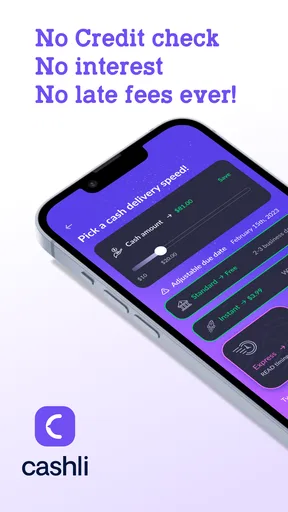
- No credit check may help users with limited credit history
- Rewards can provide extra value beyond the cash advance
- Simple interface makes account management easy
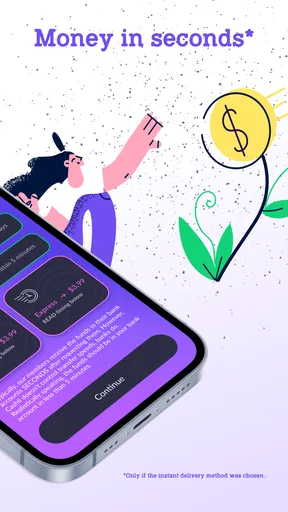
- Funds may arrive quickly after approval
Limitations of Cashli: Cash Advance & Rewards
- Advance availability and limits depend on eligibility
- Fees or optional tips can increase the repayment amount
- Repayment is typically automatic on the scheduled date
- Late or failed payments may lead to account restrictions
- Rewards may require significant activity to redeem
Similar Picks in This Category
View All
Google Wallet
Google LLC4.3

Airtel: Recharge, Bank & Loans
Airtel4.0

PayPal - Pay, Send, Save
PayPal Mobile4.2

DANA Indonesia Digital Wallet
PT Espay Debit Indonesia Koe4.5

Binance: Buy Bitcoin & Crypto
Binance Inc.4.8

Cash App
Block, Inc.4.7
Frequently Asked Questions
What is Cashli: Cash Advance & Rewards, and how does it work?
Cashli: Cash Advance & Rewards is a financial app designed to help eligible users access potential cash advances while also offering rewards or savings-related features. After creating an account, you may be asked to provide personal, employment, banking, and identity information so the app can assess eligibility. Available services, advance amounts, fees, and repayment terms can vary by user and location.
Is Cashli: Cash Advance & Rewards a legitimate loan provider?
Cashli should not automatically be viewed as a traditional bank or direct lender. Depending on your location and the specific product offered, the app may connect users with third-party providers or financial services. Before accepting anything, carefully review the provider’s name, annual percentage rate, subscription charges, origination fees, repayment schedule, privacy policy, and any authorization for automatic withdrawals.
How much money can I receive, and how quickly is it delivered?
The amount and delivery speed depend on factors such as your eligibility, income information, account history, verification results, and the provider available in your area. Some users may receive funds quickly, while others may need additional review or may not qualify. Extra charges may apply for expedited transfers, so check the final cost and estimated arrival time before confirming.
What fees, repayment rules, or subscriptions should I know about?
Cash advance apps can involve more than one type of cost, including membership or subscription fees, transfer fees, optional expedited delivery charges, or fees charged by a third-party provider. Repayment may be scheduled automatically from your linked bank account on a specified date. Read every disclosure carefully, confirm whether a recurring subscription is enabled, and make sure the repayment amount fits your budget.
Is my personal and banking information safe when using Cashli?
Using a cash advance service generally requires sharing sensitive details, such as your identity, income, bank account, and transaction information. Before signing up, review Cashli’s privacy policy to understand what data is collected, why it is used, and whether it is shared with partners. Download the app only from an official store, use a strong password, and avoid entering information through suspicious links or messages.
